
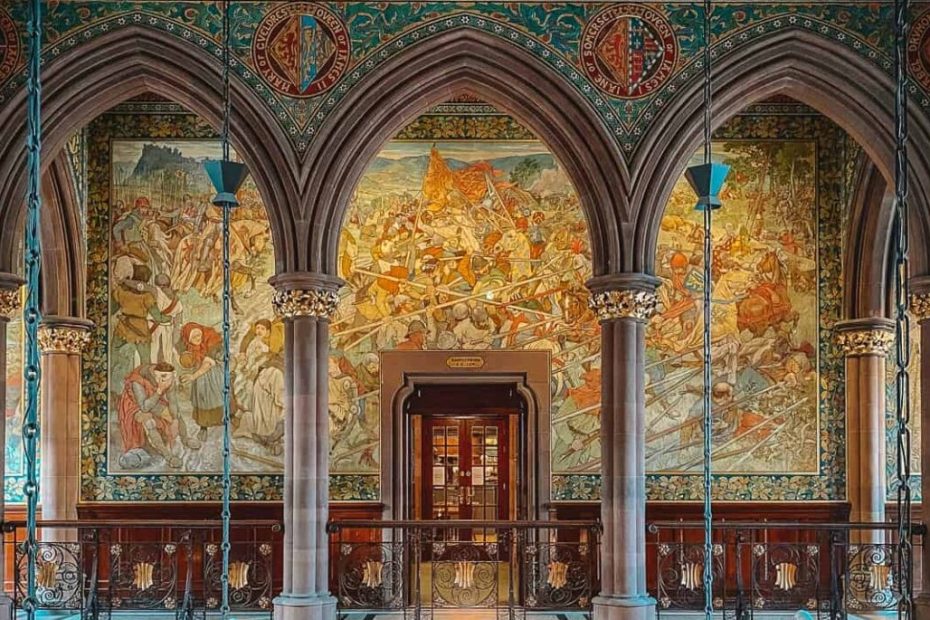
The Scottish National Portrait Gallery Edinburgh is one of Scotland’s most important cultural institutions and a major center for the preservation and interpretation of the nation’s history through portraiture. Located at 1 Queen Street at the east end of Edinburgh’s New Town, the gallery is part of the National Galleries of Scotland network, which also includes the Scottish National Gallery and the Scottish National Gallery of Modern Art.
Founding and Purpose
The gallery was founded in 1889, making it the first purpose-built portrait gallery in the world. It was established through a gift from John Ritchie Findlay, a newspaper publisher and philanthropist associated with The Scotsman. His donation funded the construction of the building, which was designed by the architect Sir Robert Rowand Anderson in a distinctive neo-Gothic style.
The founding purpose of the gallery was to present portraits of notable Scots and individuals who have significantly influenced Scotland’s history and culture. Rather than organizing art chronologically by artistic movement, the Portrait Gallery’s focus has traditionally been biographical and historical. The collection is intended to tell the story of Scotland through the people who shaped it — from monarchs and political leaders to scientists, writers, inventors, and contemporary public figures.
The Portrait Gallery Edinburgh – Architecture and Design
The building itself is architecturally significant. Constructed in red sandstone, it stands out among the predominantly neoclassical buildings of Edinburgh’s New Town. Its Gothic Revival style includes pointed arches, sculptural details, and decorative stonework.
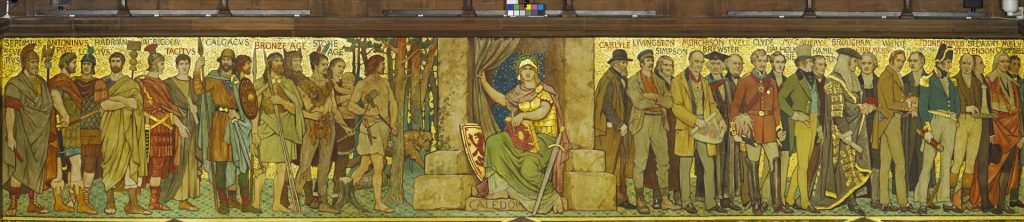
Inside, one of the most striking features is the Great Hall, a cathedral-like space with a painted frieze depicting important figures from Scottish history. The ceiling and walls incorporate elaborate murals and inscriptions that celebrate national identity and intellectual achievement. The gallery underwent a major refurbishment between 2009 and 2011, reopening in December 2011 after extensive restoration and modernization. This renovation improved accessibility, conservation facilities, lighting, and gallery spaces while preserving historic features.
The Portrait Gallery Edinburgh – Collection
The Scottish National Portrait Gallery houses thousands of works spanning from the 16th century to the present. The collection includes:
- Oil paintings
- Sculptures
- Photography
- Drawings
- Miniatures
- Prints
The gallery’s holdings cover a wide spectrum of historical periods and artistic styles. Among its most notable works are portraits of Mary, Queen of Scots, Bonnie Prince Charlie, Robert Burns, Sir Walter Scott, David Hume, and Charles Darwin (who had Scottish connections). Charles Darwin was a good friend of John Ruskin. Modern figures represented include political leaders, athletes, writers, scientists, musicians, and actors.
Photography plays a significant role in the collection. The gallery contains one of Scotland’s most important collections of photographic portraits, documenting public figures and ordinary citizens alike. Contemporary portrait commissions are also a core component of the gallery’s mission. New portraits are regularly added to reflect evolving understandings of national identity.
Thematic Displays
Following its 2011 reopening, the The Portrait Gallery Edinburgh reorganized its displays to present Scottish history chronologically. The exhibition spaces are typically arranged by historical period:
- The early modern period, including the Reformation and Renaissance
- The Enlightenment era
- The Industrial Revolution
- The Victorian period
- The 20th and 21st centuries
This structure allows visitors to trace Scotland’s social, political, and cultural development through portraiture. Each room contextualizes individuals within broader historical movements, offering interpretive text and historical background.
Education and Public Engagement
The The Portrait Gallery Edinburgh provides extensive educational programming, including guided tours, lectures, workshops, and school visits. It aims to serve both academic researchers and the general public. Family-friendly activities and interactive displays are incorporated into exhibitions to broaden accessibility.
Temporary exhibitions are also a significant part of the gallery’s programming. These may focus on specific artists, historical themes, or contemporary portrait practice. The institution frequently collaborates with international museums to host touring exhibitions.
Cultural Significance
The Portrait Gallery Edinburgh plays a central role in shaping how Scottish identity is represented and understood. Portraiture is uniquely suited to exploring questions of power, fame, influence, and memory. By deciding which individuals are displayed and contextualized, the gallery participates in ongoing conversations about representation and national heritage.
In recent decades, the institution has made efforts to diversify its representation, including greater inclusion of women, minority communities, and contemporary cultural figures. This reflects broader museum-sector discussions about inclusivity and historical reassessment.
Visitor Information
Admission to the permanent collection is generally free, though special exhibitions may require tickets. The gallery includes The Portrait Gallery Edinburgh café and a gift shop. Its central location near Princes Street makes it easily accessible by public transport and within walking distance of major Edinburgh landmarks.
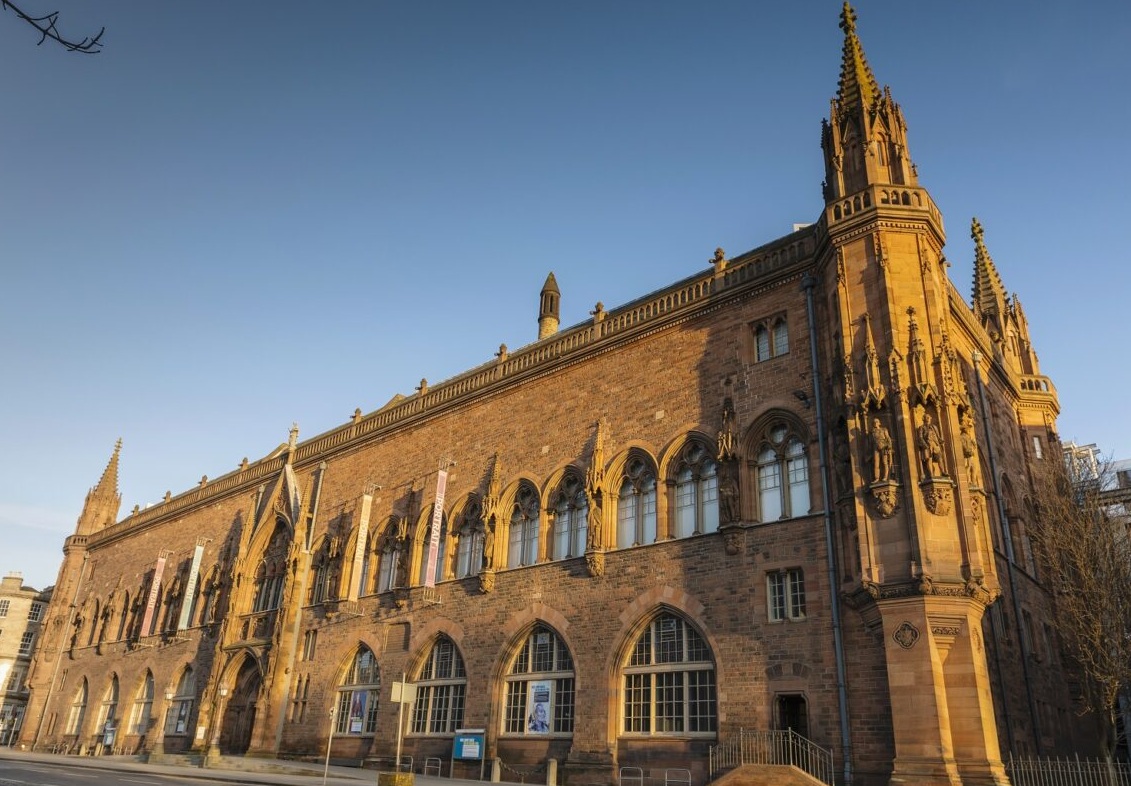
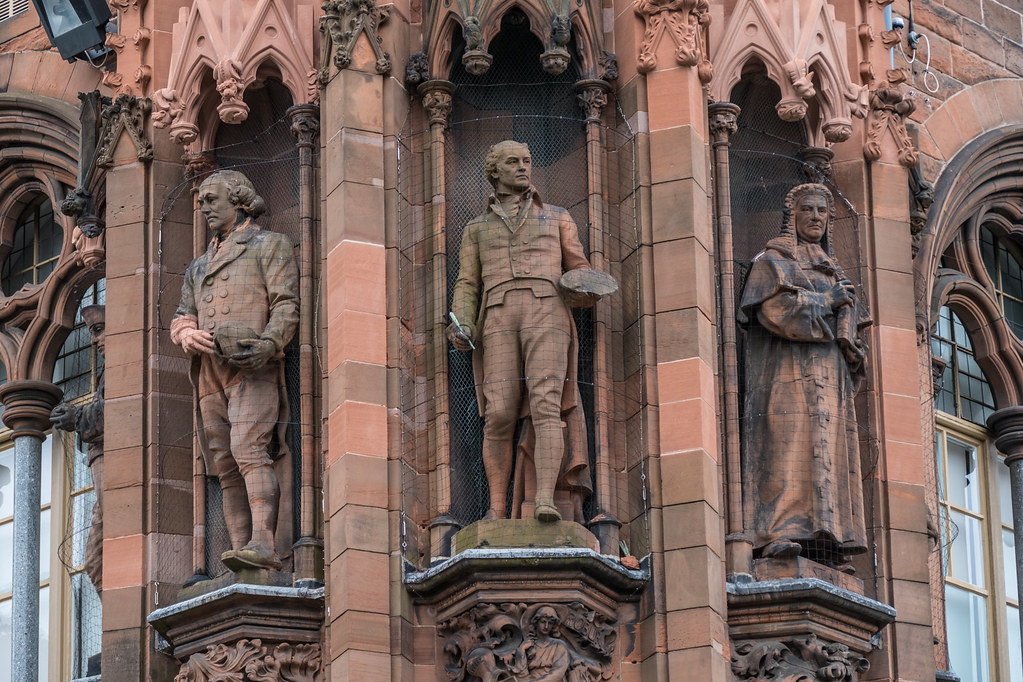
The outiside of The Scottish Portrait Gallery Edinburgh is also spectacular. A fine example of Gothic Victorian Architecure.
Summary
The Portrait Gallery Edinburgh is historically significant as the world’s first purpose-built portrait gallery and architecturally notable for its Gothic Revival design. Its collection documents over five centuries of Scottish history through art, photography, and sculpture. By combining heritage preservation, contemporary commissions, educational outreach, and temporary exhibitions, the gallery functions not only as an art institution but also as a cultural archive of Scotland’s evolving national story.